High Voltage · Magnetics · Team Project
Electromagnetic Pulse Demonstrator
- Source
- Single 9 V battery
- Converter
- DC step-up module
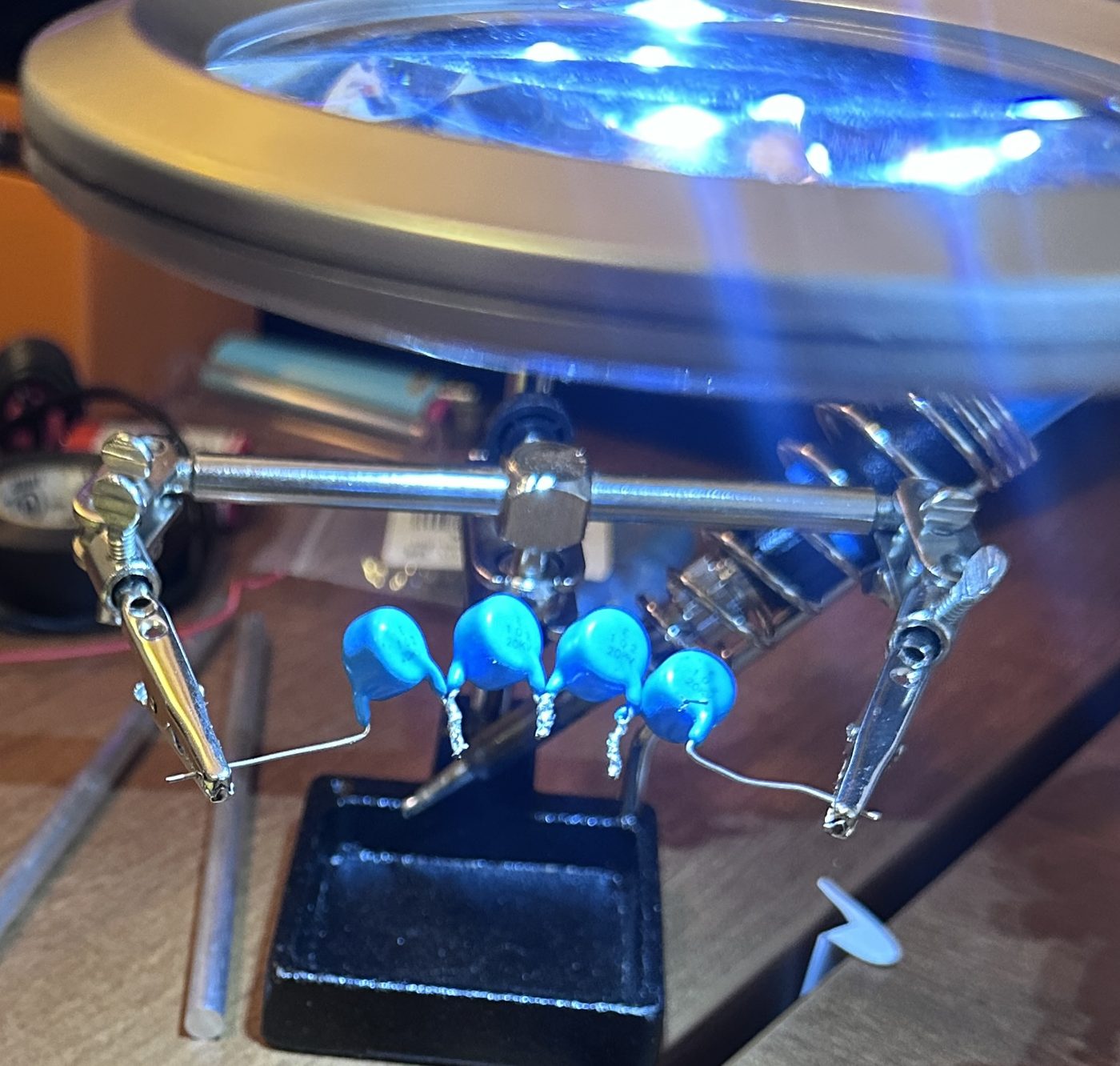
- Storage
- Four 20 kV ceramic capacitors
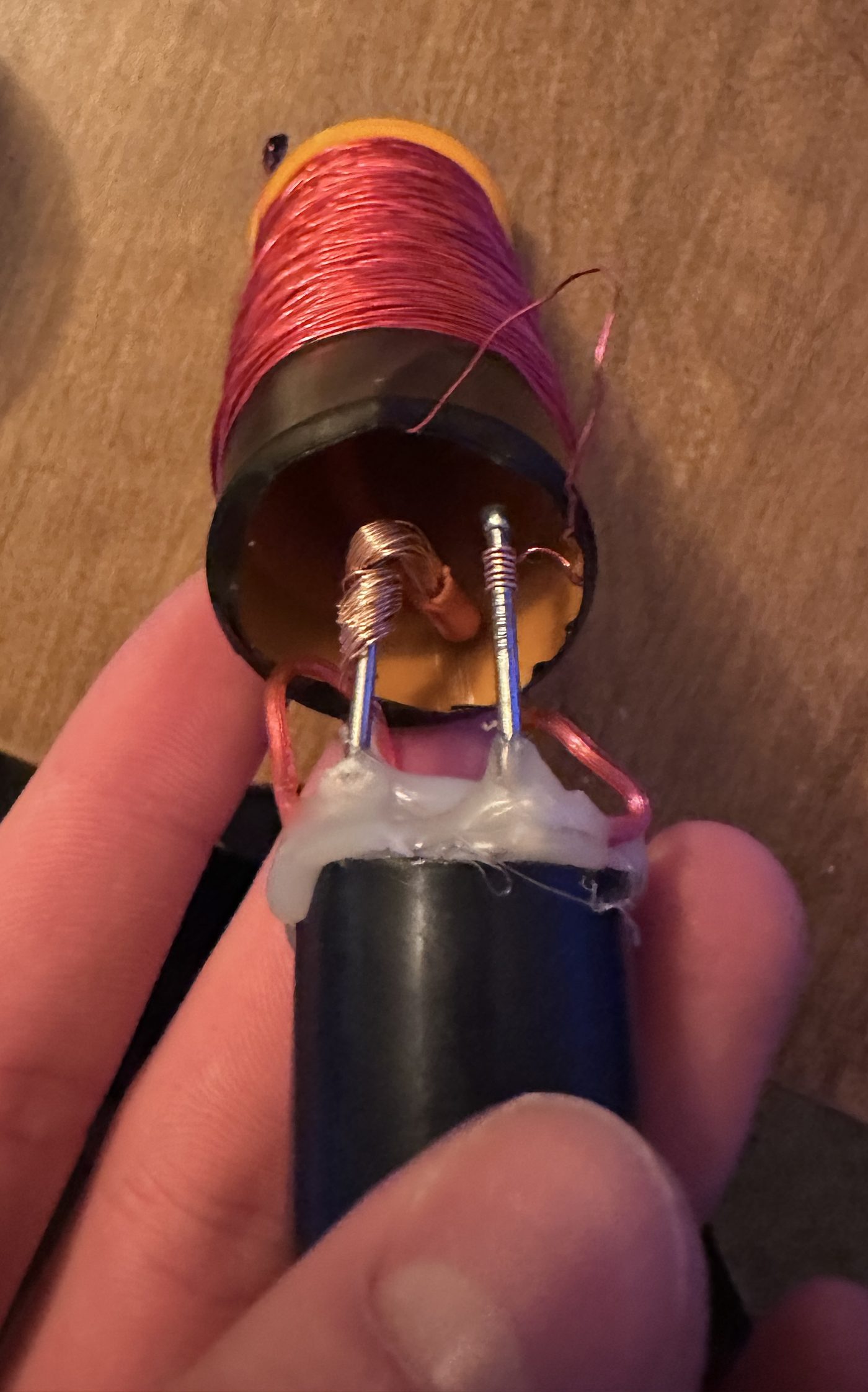
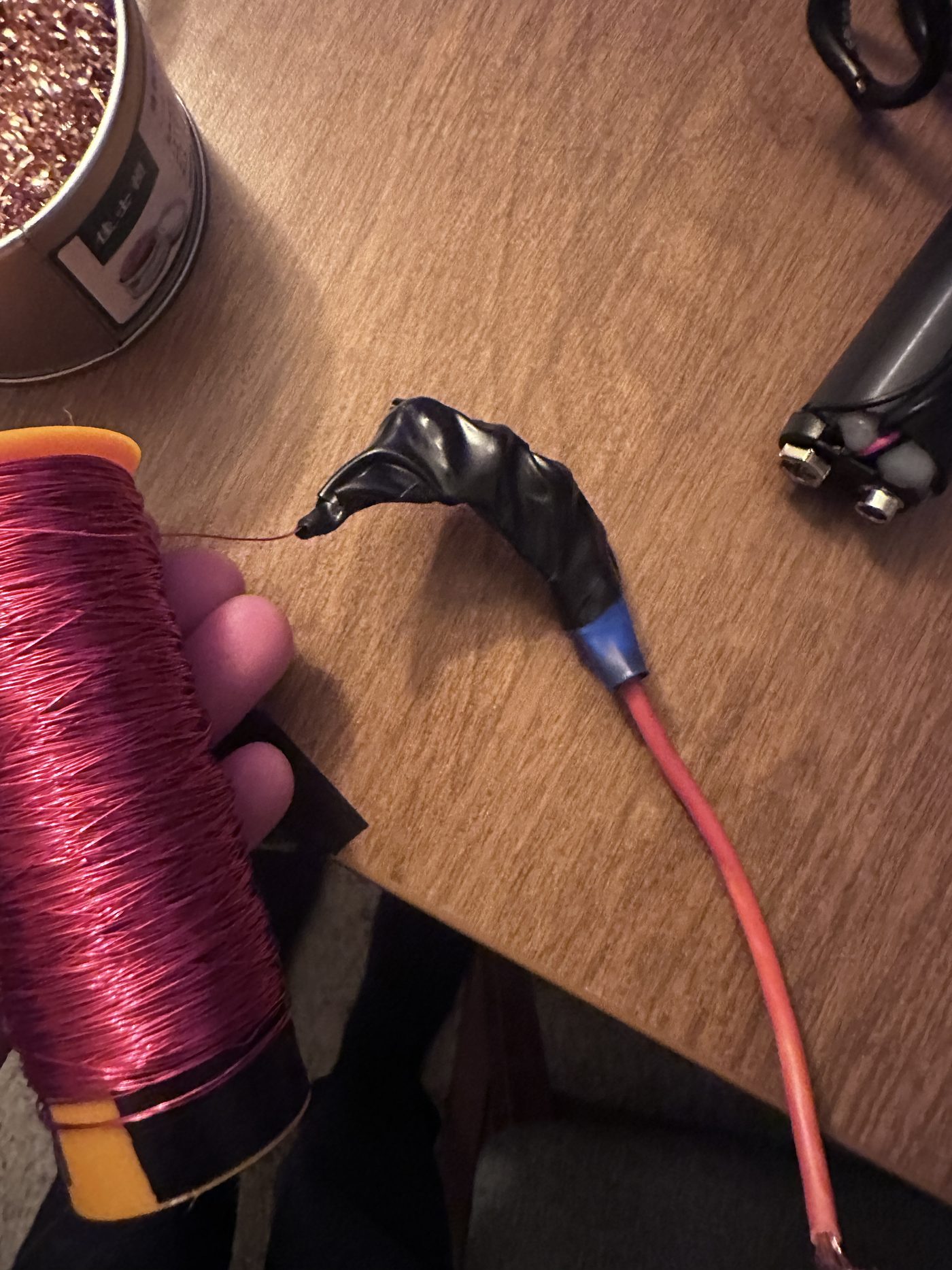
- Coil
- Hand-wound enameled copper on a 3D-printed tube
- Electrodes
- Nails, set in hot glue
- Team
- With Angel Avila Ponce and Ali Behbehani, Nov 2025
What it is
A capacitor-discharge device that makes a short, strong burst of electromagnetic energy, the same thing a lightning strike does on a much bigger scale. A pulse like this induces sudden voltage and current spikes in nearby conductors, which is how an EMP disrupts electronics.
The requirements were to make the pulse from a small battery, use 3D printing, keep the cost down, and make it safe to hold.
The 250,000 V claim
The step-up converter we used was advertised at 250,000 V. We put it in the parts list with a note saying that was "hard to believe." A module that small and cheap can't really produce a quarter of a million volts, and if we had believed it, we would have sized everything else around a number that isn't real.
We chose 20 kV capacitors because that was a limit we could reason about, not because the converter's advertised number said we could go higher.
What was hard
Four things gave us trouble. Parts were often at risk of blowing, so we charged it carefully. Deciding how many capacitors to use was a tradeoff: more stored energy, but more stress on the converter and more danger to whoever is holding it. The tube dimensions mattered too, because the coil's shape sets the field you get.
And winding the coil by hand took a very long time. The turns go on one at a time, and the count and spacing decide whether it works at all.
Safety. "Safe to hold" was one of the four requirements, which is why it has a low supply voltage, a fully enclosed printed housing, and a set charge and discharge sequence. A charged high-voltage capacitor stays dangerous after the supply is removed, and we handled it that way.