PCB Design · Sensors · Design only
DemoSat High-Altitude Balloon Payload
Background
This started from an existing balloon payload, and the task was to redesign it. When I checked whether the original could still be built, two of its four sensors were out of production. You can't buy the humidity or pressure parts anymore, so the original design can't be built again, whether or not it worked before.
So most of the project was picking replacement parts while staying under the mass, cost and power limits.
Constraints
| Requirement | Budget | Design figure |
|---|---|---|
| Mass | under 200 g | ~120 g |
| Cost | under $147 | ~$115 |
| Power | less than the original (~90 mA) | 259 mW typical, 459 mW with all LEDs on |
Sensor selection
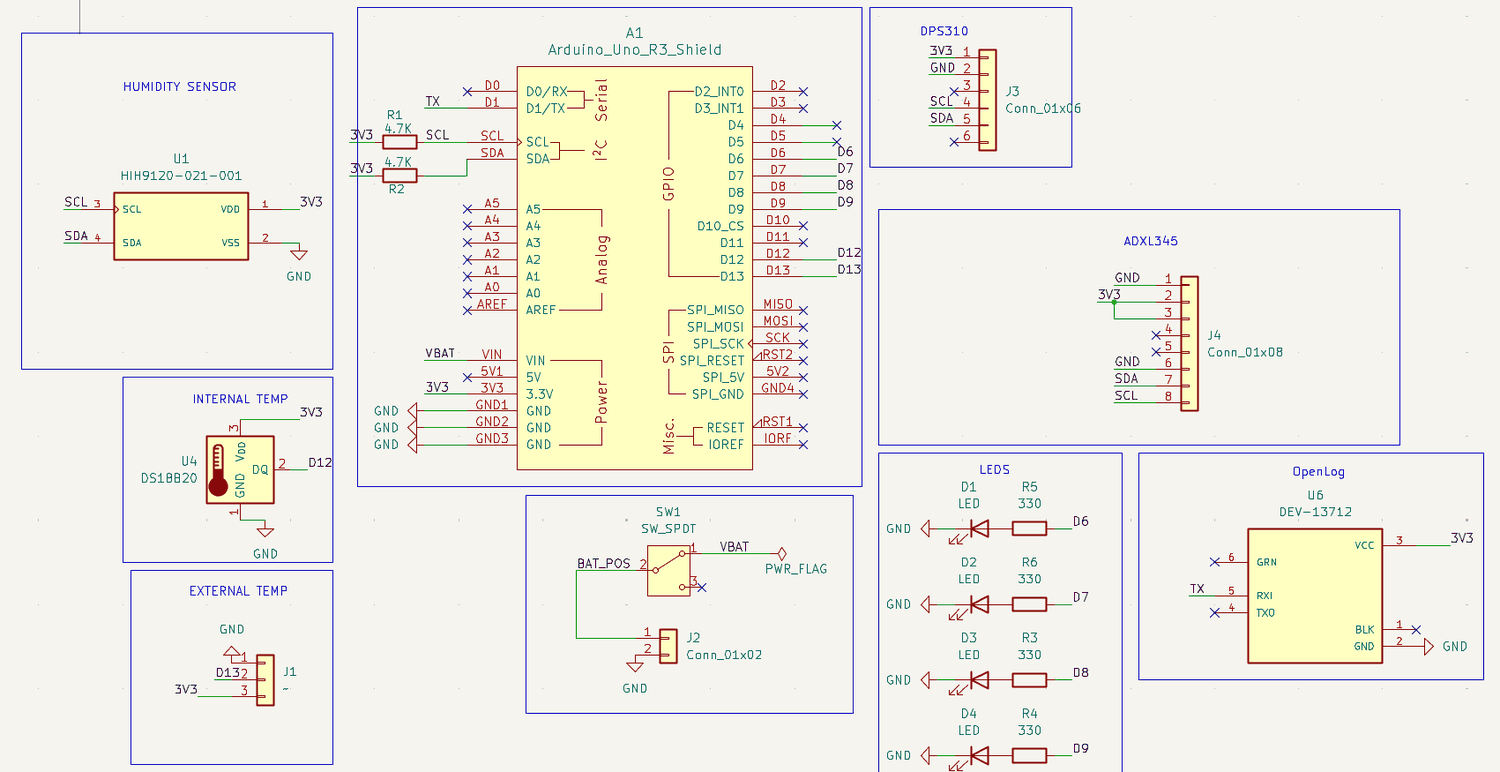
Each replacement had to be better than the part it replaced, not just available. I compared resolution, accuracy and power draw, and looked for parts that run at 3.3 V so the whole board could share one supply voltage.
| Measures | Original | Chosen | Why |
|---|---|---|---|
| Acceleration | ADXL335 | ADXL345 | I²C instead of analog, 13-bit, range to ±16 g rather than ±3 g, ~140 µA at 3.3 V |
| Pressure | HSCDANN015PAAA5 | DPS310 | 300–1200 hPa, runs on 1.7–3.6 V instead of 5 V, and only ~1.7 µA at 3.3 V |
| Humidity | HIH-4030 | HIH-9120 | I²C, ±1.7 % accuracy against ±3.5 %, physically much smaller |
| Temperature | TMP36 | DS18B20 | Digital rather than analog, 9–12 bit instead of ADC-limited to 10, ±0.5 °C against ±2 °C, waterproof package suits external mounting |
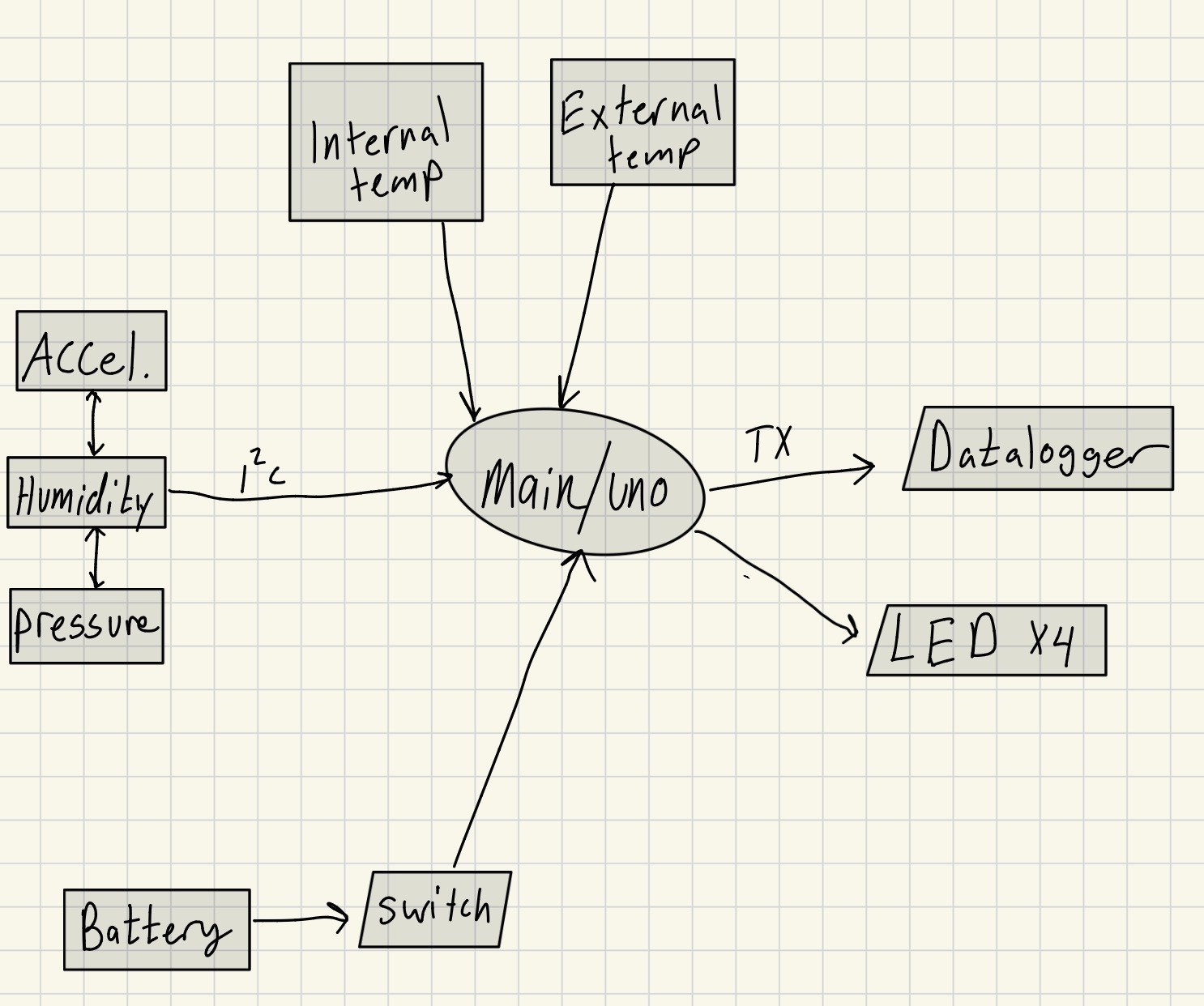
Three of the four use I²C, so they share one two-wire bus. The DS18B20 is 1-Wire instead. It uses an extra pin, but it comes as a sealed probe that can sit outside the enclosure and measure the outside air instead of the inside of a warm box.
Using digital sensors also gets around the Arduino's 10-bit ADC, which limited the accuracy of the original design no matter how good its analog sensors were.
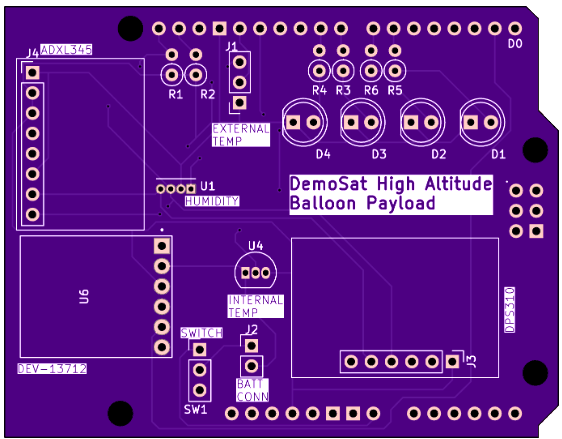
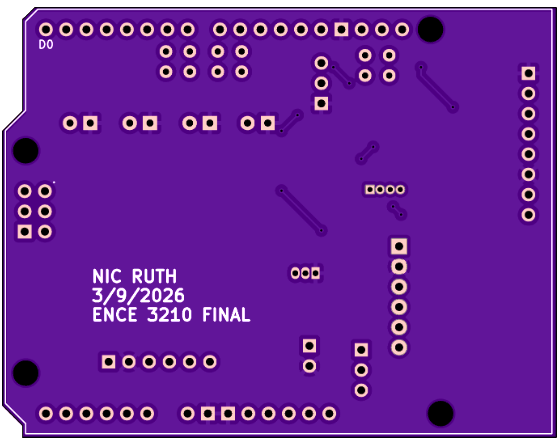
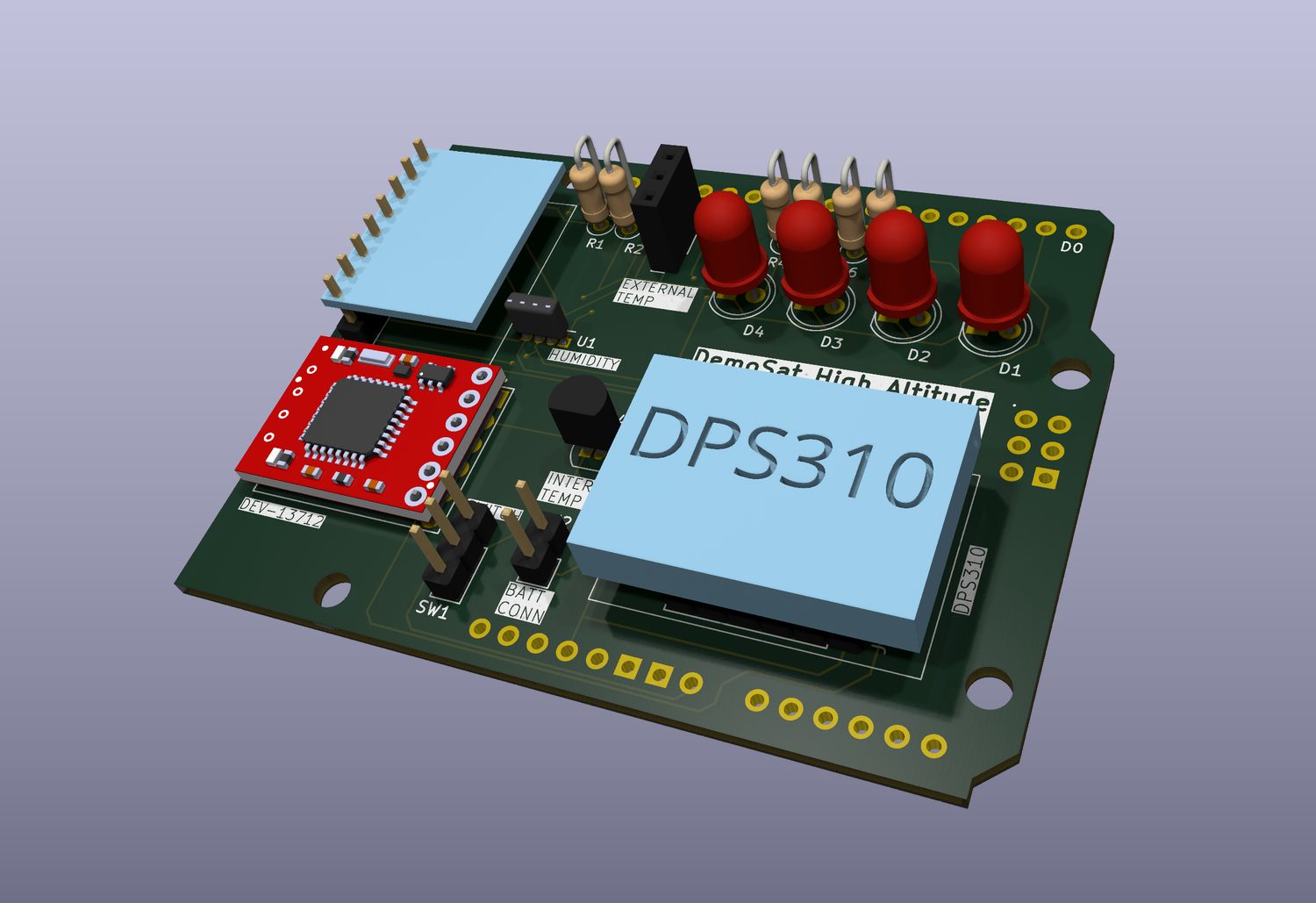
The layout is a 2-layer board, 69.5 × 54.0 mm (2.74 × 2.13 in). OSH Park quoted $29.05 for three.